

How to build an Alternative Retirement Plan with Private Real Estate
Table of Contents
The information provided in this article is for educational and informational purposes only and does not constitute financial, investment, tax, or financial planning advice. While Equiton is registered as an exempt market dealer in all Canadian provinces and territories and may provide advice on specific investments in appropriate circumstances, this content is general in nature and is not intended as a recommendation or personalized advice. Readers should consult a qualified financial planning professional or other qualified advisor before making any financial decisions.
1 in 3 Canadians Won’t Hit Their Retirement Goal. Here’s How to Avoid Being One of Them.
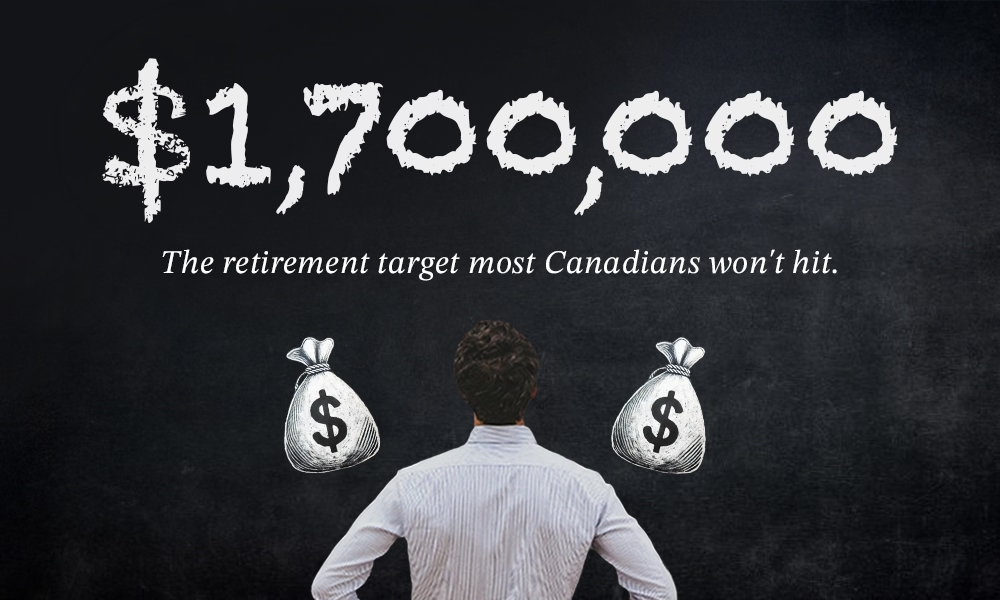
According to BMO’s 2026 Annual Retirement Survey, the average Canadian now believes they need $1.7 million to retire comfortably – yet 36% say they’re unlikely to hit a target that keeps rising. That means roughly one in three Canadians have already accepted they’ll fall short of their own definition of a comfortable retirement.
For many Canadians, this gap reflects broader financial‑planning considerations rather than savings alone. Understanding the distinction between saving and investing and how both fit within a structured financial strategy can support long‑term retirement preparedness. This guide gives Canadian investors a clear, practical framework, whether you’re building a financial plan for the first time or taking a closer look at one already in place.
Building an Alternative Retirement Plan: Where to Start?
Retirement planning is the process of evaluating your current financial position, setting measurable long-term goals, and building a structured strategy to work towards them. As income, family responsibilities, and priorities evolve, the plan should be reviewed and adjusted accordingly. In practice, it comes down to three questions:
- How much do I need to retire?
- Am I using the right accounts?
- Am I paying more tax than I should be?
Without a plan, most people default to what feels safe – a savings account and hope. That is not a strategy.
Canada offers a range of powerful retirement planning tools: TFSAs, RRSPs, non-registered investment accounts, and private real estate funds. Knowing which tool to use and when makes the difference between retiring on your terms and retiring with whatever remains.
Check out the different investment accounts and tools available here: https://www.canada.ca/en/financial-consumer-agency/services/savings-investments.html
Saving vs Retirement planning
Saving is a habit. Retirement planning is a strategy.
Saving sets money aside. Retirement planning considers what comes next. It covers investing, tax planning, account selection, and income strategy. It helps build a clear path from today to an affordable retirement.
Saving fills the tank. Retirement planning steers the car.
Saving Money Tips With an Actually Goal to Move the Needle
Saving is not the problem – treating it as the complete solution is. Saving is the foundation of any strong financial plan. But a foundation alone does not build a house.
Saving money tips that build real financial discipline:
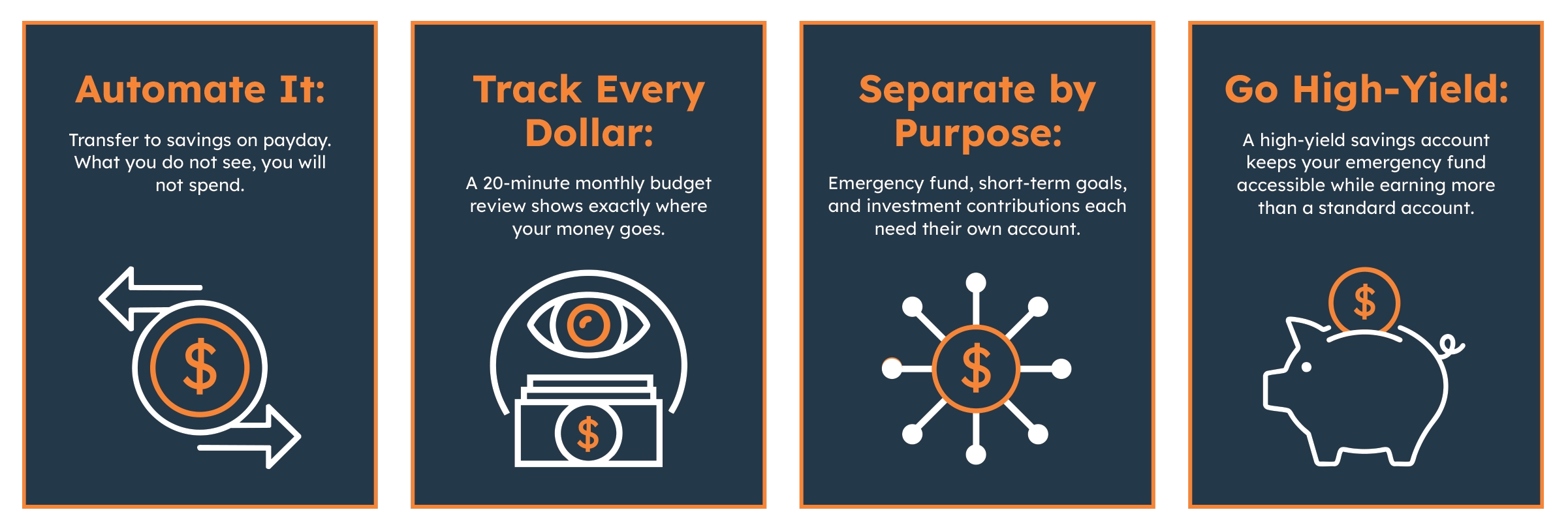
Automate it. Transfer to savings on payday. What you do not see, you will not spend.
Track every dollar. A 20-minute monthly budget review shows exactly where your money goes.
Separate by purpose. Emergency fund, short-term goals, and investment contributions each need their own account.
Go high-yield. A high-yield savings account keeps your emergency fund accessible while earning more than a standard account.
Build Your Emergency Fund First
Before investing a single dollar, build an emergency fund.
Aim for three to six months of living expenses in a liquid, accessible account. Without it, one unexpected bill can force you to sell investments at the wrong time or push you into debt.
Your emergency fund protects your investment plan. Build it first. Everything else follows.
Invest or Save? Understanding the Real Difference
The answer is both – deployed for different purposes across different timeframes.
Saving is for money you may need within one to three years. It is secure, accessible, and stable. The tradeoff: it barely grows.
Investing often considered for longer-term financial goals. You take on measured risk in exchange for returns that outpace inflation. Over time, this is how everyday Canadians can build real wealth.
The numbers make the case:
For illustrative purposes, $50,000 earning 1.5% annually would grow to approximately $78,000 over 30 years, while at 7% it would grow to approximately $380,000
That $300,000 gap illustrates the potential impact of different approaches over time.
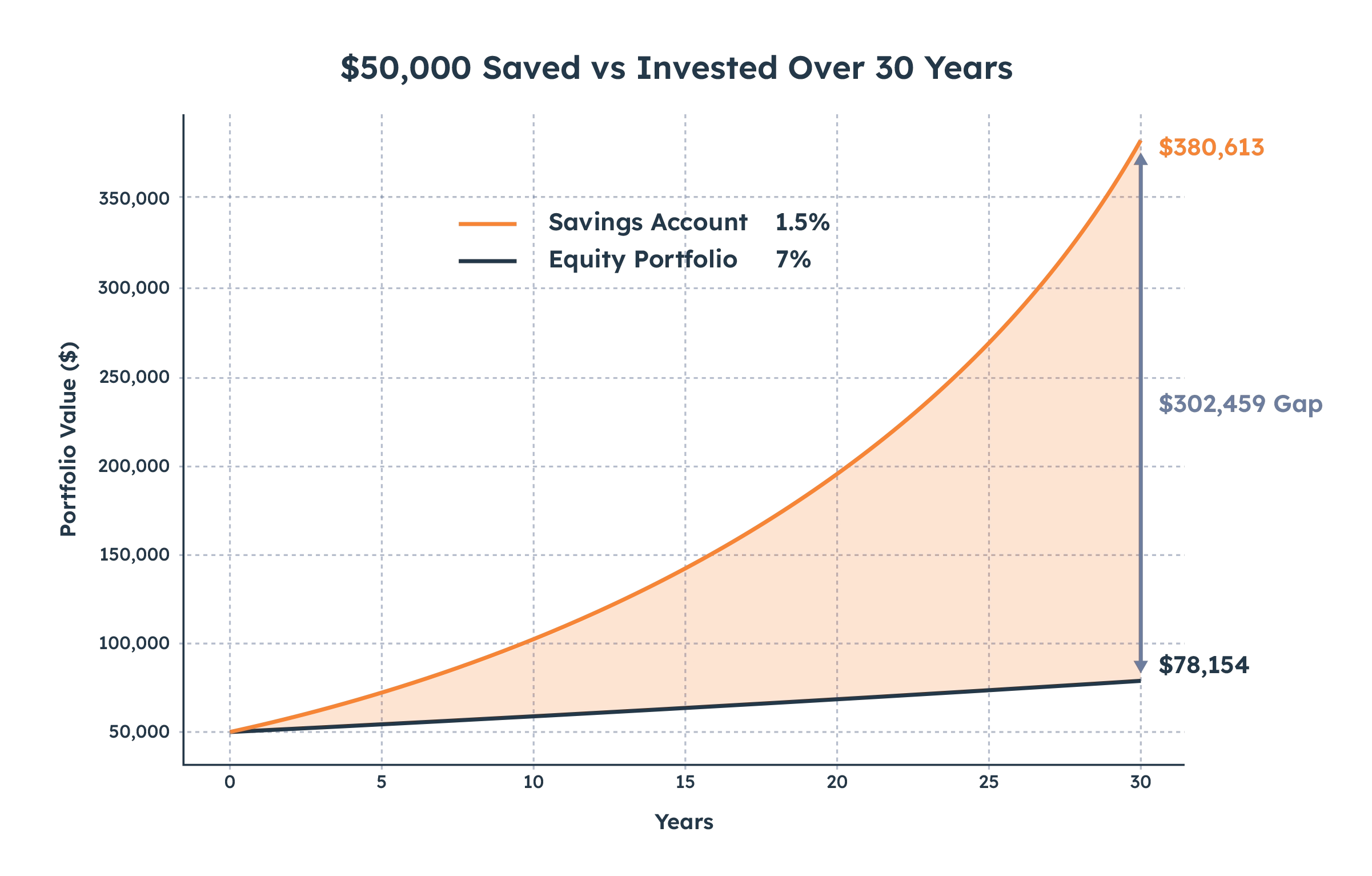
Hypothetical example for illustrative purposes only and is not intended as financial, tax, or investment advice. Please consult a qualified professional before making any financial decisions.
Strategic Retirement planning in Practice
Strategic retirement planning generally involves making careful, informed financial choices.
Strong plans often:
- Use investment types that may help address inflation over time.
- Reduce taxes through use of registered accounts
- Spread investments across different asset types.
- Focus on your specific situation: income, age, risk profile, debts, and retirement vision.
- Maintain liquid savings for unexpected events
It’s not a template – it’s a living plan that adapts as you go through life and when things change over time.
The information provided in this article is for educational and informational purposes only and does not constitute financial, investment, tax, or financial planning advice. While Equiton is registered as an exempt market dealer in all Canadian provinces and territories and may provide advice on specific investments in appropriate circumstances, this content is general in nature and is not intended as a recommendation or personalized advice. Readers should consult a qualified financial planning professional or other qualified advisor before making any financial decisions.
1 in 3 Canadians Won’t Hit Their Retirement Goal. Here’s How to Avoid Being One of Them.
According to BMO’s 2026 Annual Retirement Survey, the average Canadian now believes they need $1.7 million to retire comfortably – yet 36% say they’re unlikely to hit a target that keeps rising. That means roughly one in three Canadians have already accepted they’ll fall short of their own definition of a comfortable retirement.
For many Canadians, this gap reflects broader financial‑planning considerations rather than savings alone. Understanding the distinction between saving and investing and how both fit within a structured financial strategy can support long‑term retirement preparedness. This guide gives Canadian investors a clear, practical framework, whether you’re building a financial plan for the first time or taking a closer look at one already in place.
Building an Alternative Retirement Plan: Where to Start?
Retirement planning is the process of evaluating your current financial position, setting measurable long-term goals, and building a structured strategy to work towards them. As income, family responsibilities, and priorities evolve, the plan should be reviewed and adjusted accordingly. In practice, it comes down to three questions:
- How much do I need to retire?
- Am I using the right accounts?
- Am I paying more tax than I should be?
Without a plan, most people default to what feels safe – a savings account and hope. That is not a strategy.
Canada offers a range of powerful retirement planning tools: TFSAs, RRSPs, non-registered investment accounts, and private real estate funds. Knowing which tool to use and when makes the difference between retiring on your terms and retiring with whatever remains.
Check out the different investment accounts and tools available here: https://www.canada.ca/en/financial-consumer-agency/services/savings-investments.html
Saving vs Retirement planning
Saving is a habit. Retirement planning is a strategy.
Saving sets money aside. Retirement planning considers what comes next. It covers investing, tax planning, account selection, and income strategy. It helps build a clear path from today to an affordable retirement.
Saving fills the tank. Retirement planning steers the car.
Saving Money Tips with an Actual Goal to Move the Needle
Saving is not the problem – treating it as the complete solution is. Saving is the foundation of any strong financial plan. But a foundation alone does not build a house.
Saving money tips that build real financial discipline:
Automate it. Transfer to savings on payday. What you do not see, you will not spend.
Track every dollar. A 20-minute monthly budget review shows exactly where your money goes.
Separate by purpose. Emergency fund, short-term goals, and investment contributions each need their own account.
Go high-yield. A high-yield savings account keeps your emergency fund accessible while earning more interest than a standard account.
Build Your Emergency Fund First
Before investing a single dollar, build an emergency fund.
Aim for three to six months of living expenses in a liquid, accessible account. Without it, one unexpected bill can force you to sell investments at the wrong time or push you into debt.
Your emergency fund protects your investment plan. Build it first. Everything else follows.
Invest or Save? Understanding the Real Difference
The answer is both – deployed for different purposes across different timeframes.
Saving is for money you may need within one to three years. It is secure, accessible, and stable. The tradeoff: it barely grows.
Investing is often considered for longer-term financial goals. You take on measured risk in exchange for returns that outpace inflation. Over time, this is how everyday Canadians can build real wealth.
The numbers make the case:
For illustrative purposes, $50,000 earning 1.5% annually would grow to approximately $78,000 over 30 years, while at 7% it would grow to approximately $380,000
That $300,000 gap illustrates the potential impact of different approaches over time.
Hypothetical example for illustrative purposes only and is not intended as financial, tax, or investment advice. Please consult a qualified professional before making any financial decisions.
Investment and Retirement Planning: Where to Begin
Start with the outcome and work backwards.
Ask one honest question: what kind of retirement do I want, and what will it cost? Once you have that number, the right mix of savings, accounts, and investments becomes clear.
Planning for Retirement in Your 30s, 40s and 50s
In Your 30s: Time is your greatest advantage. Start your TFSA and RRSP early. Invest consistently. Consider private real estate for long-term growth. Build the habit now and let compounding take care of the rest.
In Your 40s: Peak earning years mean peak opportunity. . Use a non-registered investment account for capital beyond contribution limits. Add income-generating assets. This is the decade to make retirement planning concrete, not conceptual.
In Your 50s: The focus shifts from building to protecting. Plan how you will draw down assets in what order and with what tax impact. Test your plan against a 30% market drop. Make sure passive income can cover essential expenses without forcing asset sales at the wrong time.
Setting Clear Long-Term Financial Goals
“I want to retire comfortably” is a wish.
“I want to retire at 62 with $5,500 per month in after-tax income from my RRSP, TFSA, and private real estate distributions” is a long-term financial goal with a target, a timeline, and a plan.
Be specific. Review annually. Adjust as life changes.
Planning for Retirement: How Much Is Actually Enough?
Most rules of thumb suggest 70–80% of pre-retirement income. But most calculations miss longevity.
Canadians live longer now. Your money may need to last 30 years or more.
Planning for retirement isn’t just about hitting a number. It’s about building a structure that sustains you for decades through capital growth, preserved assets, and reliable passive income.
A retirement calculator can help you project your savings, income, and timeline so you can better understand what retirement might look like.

Using the Right Investment Accounts
How a Tax-Free Investment Account Supercharges Your Returns
The TFSA is Canada’s most underutilized retirement tool. Used the right way as a tax-free account, it can hold stocks, ETFs, or private real estate funds.
All growth and income stay completely tax-free. Withdrawals are tax-free too, at any time.
Imagine holding a private real estate fund inside your TFSA that pays monthly income. Every distribution is yours to keep.
Over decades, that tax-free compounding can add tens of thousands of dollars to your retirement. Max your TFSA every year without exception.
What Is a Non-Registered Investment Account and When Should You Use One?
Once you’ve maxed your registered accounts, a non-registered investment account is your next move. No contribution limits, full investment flexibility.
You must pay tax on gains. However, capital gains get special treatment. You include only 50% in your taxable income.
For Canadian investors building passive income from private real estate distributions or dividends, a non-registered account is essential. It should be part of a complete retirement strategy.
Private Real Estate Investment
Understanding the Asset Class
Historically private real estate was accessible only to institutions and high-net-worth individuals. That’s changed. Private real estate funds offer exposure to real estate portfolios that may generate rental income, without requiring investors to manage properties themselves
How Private Real Estate Funds Work
Private real estate funds pool capital from multiple investors to acquire and manage income-generating properties, often multi-residential buildings. Investors hold units in the fund rather than individual properties, which spreads risk across multiple assets.
The benefits include:
- A structure designed to be less dependent on short-term market swings
- Regular income distributions, often monthly
- Potential long-term capital appreciation
- Professional management of the properties
Liquidity is an important consideration. Private real estate investments are typically best suited for capital you plan to hold long term, such as retirement savings. They are not meant for short-term trading or quick access.
Your capital is tied to physical properties, and physical properties take time to transact. Most private real estate funds provide quarterly redemption windows, meaning there are scheduled periods where you can request your capital back, rather than anytime access.
Private real estate is a long-term strategy. It works best for capital with time on its side.
Passive Income in Canada
One of the main challenges in retirement is converting savings into a steady, reliable income- oriented approach without being forced to sell investments at the wrong time. Private real estate funds can provide potential monthly distributions while keeping your capital invested and positioned for growth. For Canadian investors, a targeted income distributions strategy layers multiple income streams working in combination:
- CPP and OAS government entitlements
- RRSP and RRIF withdrawals structured for tax efficiency
- Dividend income from equities held within a TFSA or non-registered account
- Monthly distributions from private real estate investments
The goal is simple: earn enough passive income to cover basic needs, so your portfolio can grow. The more income your investments generate, the less you sell – and the longer your wealth lasts. Private real estate is one of the most dependable sources of income. People always need somewhere to live.
Growing Your Wealth with Equiton
Equiton exists to help everyday Canadian investors access institutional-quality private real estate. This kind of investment was out of reach for most people until recently.
The Apartment Fund at Equiton invests in many multi-residential properties across Canada. It aims to provide monthly income from real rental revenue. It also seeks long-term growth in value.
No landlord responsibilities. Just steady, real estate-backed returns.
For investors with a longer horizon and higher risk appetite, Equiton’s development opportunities offer the potential for a larger one-time return upon project completion, a powerful growth-oriented complement to an income-focused retirement portfolio.
You can hold Equiton investments in a non-registered account or in registered accounts like a TFSA. This gives you flexibility to add private real estate to your plan in a tax-efficient way.
The Bottom Line: Save, Invest – and Do Both with Purpose
Savings provide stability. Investing generates growth. Strategic financial planning ensures both are working in coordination toward a defined retirement outcome. Canadians who achieve financial independence in retirement do so by moving capital beyond the savings account and positioning it for long-term growth through disciplined investment, tax-efficient account structures, and assets such as private real estate.
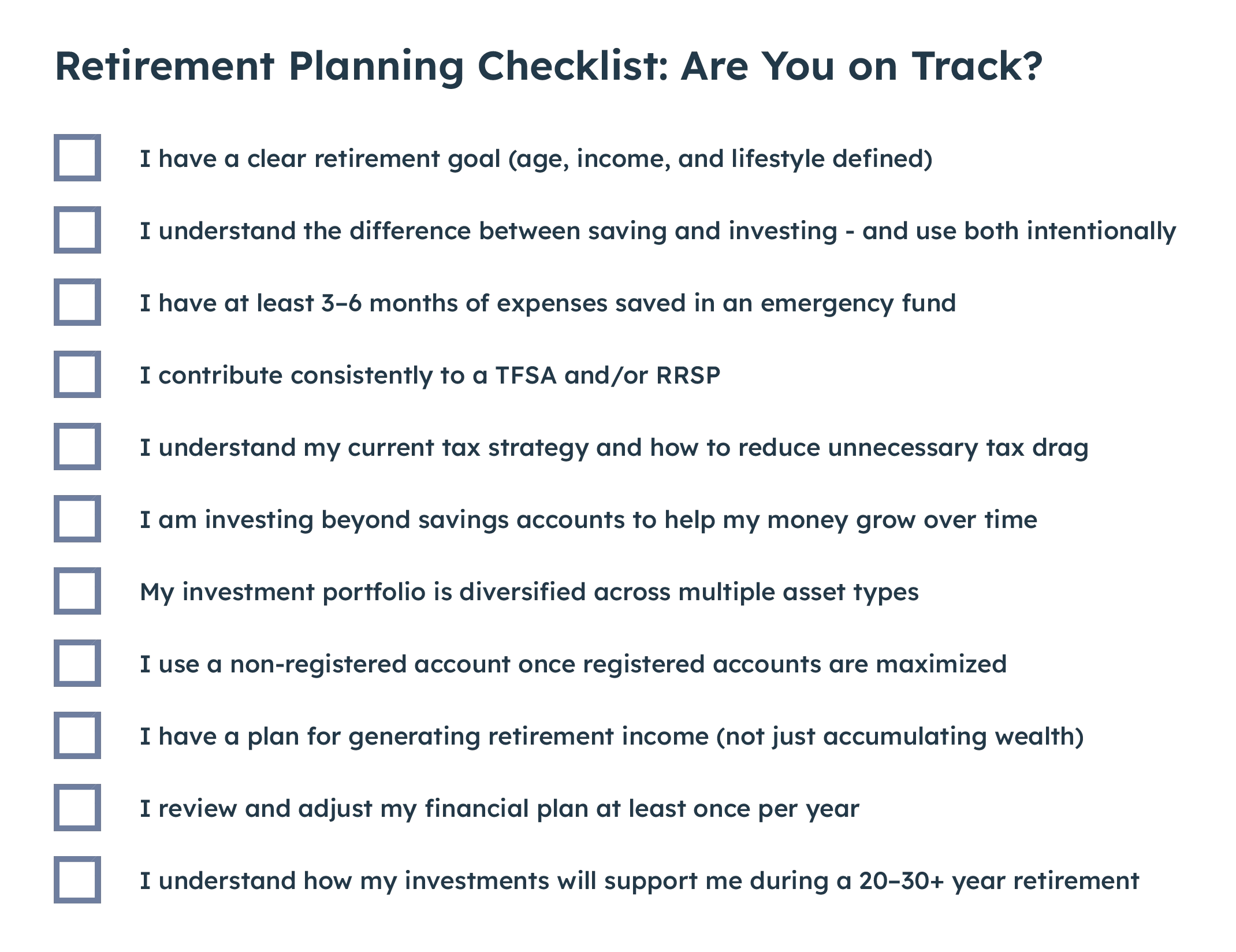
The real question is whether your own plan reflects that balance in practice. Use the checklist below to quickly assess where you stand today:
Strategic Retirement planning in Practice
Strategic retirement planning generally involves making careful, informed financial choices.
Strong plans often:
- Use investment types that may help address inflation over time.
- Reduce taxes through use of registered accounts
- Spread investments across different asset types.
- Focus on your specific situation: income, age, risk profile, debts, and retirement vision.
- Maintain liquid savings for unexpected events
It’s not a template – it’s a living plan that adapts as you go through life and when things change over time.
Investment and Retirement Planning: Where to Begin
Start with the outcome and work backwards.
Ask one honest question: what kind of retirement do I want, and what will it cost? Once you have that number, the right mix of savings, accounts, and investments becomes clear.
Planning for Retirement in Your 30s, 40s and 50s
In Your 30s: Time is your greatest advantage. Start your TFSA and RRSP early. Invest consistently. Build the habit now and let compounding take care of the rest.
In Your 40s: Peak earning years mean peak opportunity. Max your registered accounts. Use a non-registered investment account for capital beyond contribution limits. This is the decade to make retirement planning concrete, not conceptual.
In Your 50s: As you’re nearing retirement, your focus and risk profile are likely changing. Speak with a professional advisor to understand the tax impact and stress test your plan. Make sure income can cover essential expenses without forcing asset sales at the wrong time.
Setting Clear Long-Term Financial Goals
“I want to retire comfortably” is a wish.
“I want to retire at 62 with $5,500 per month in after-tax income from my RRSP, TFSA, and private real estate distributions” is a long-term financial goal with a target, a timeline, and a plan.
Be specific. Review annually. Adjust as life changes.
Planning for Retirement: How Much Is Actually Enough?
Most rules of thumb suggest 70–80% of pre-retirement income. But most calculations miss longevity.
Canadians live longer now. Your money may need to last 30 years or more.
Planning for retirement isn’t just about hitting a number. It’s about building a structure that sustains you for decades through capital growth, preserved assets, and reliable passive income.
A retirement calculator can help you project your savings, income, and timeline so you can better understand what retirement might look like.
Using the Right Investment Accounts
How a Tax-Free Savings Account Can Be a Game Changer
The TFSA is Canada’s most underutilized retirement tool. Used the right way as a tax-free investment account, it can hold stocks, ETFs, or private real estate funds.
All growth and income stay completely tax-free. Withdrawals are tax-free too, at any time.
Imagine holding a private real estate fund inside your TFSA that is designed to provide monthly income. Every distribution is yours to keep.
Over decades, tax-free compounding can potentially add tens of thousands of dollars to your retirement savings. Max your TFSA every year without exception.
What Is a Non-Registered Investment Account and When Should You Use One?
Once you’ve maxed your registered accounts, a non-registered investment account is your next move. No contribution limits, full investment flexibility.
You must pay tax on income and capital gains. However, capital gains get special treatment. You include only 50% in your taxable income.
For Canadian investors building passive income from private real estate distributions, dividends, or other income producing investments, a non-registered account is often useful.
Private Real Estate Investment
An Alternative Retirement Plan: Going Beyond Traditional Savings
Most Canadians build their retirement around the same set of tools which are are solid foundations but for many people, they’re not enough on their own. An alternative retirement plan expands beyond these defaults by adding income-generating assets that work independently of public markets.
Understanding the Asset Class
Historically private real estate was accessible only to institutions and high-net-worth individuals. That’s changed. Some private real estate funds offer exposure to real estate portfolios that may generate rental income, without requiring investors to manage properties themselves.
How Private Real Estate Funds Work
Private real estate funds are one way to access the asset class. Some funds pool capital from multiple investors to acquire and manage income-generating properties, often multi-residential buildings. Investors hold units in the fund rather than individual properties, which may spread risk across multiple physical assets. Investors hold units in the fund rather than individual properties, which spreads risk across multiple physical assets.
The potential benefits include:
- Regular income distributions, often monthly
- Long-term capital appreciation
- Professional management of the properties
Liquidity is an important consideration. Private real estate investments are typically best suited for capital you plan to hold long term, such as retirement savings. They are not meant for short-term trading or quick access.
Liquidity varies significantly depending on the fund structure. Some private real estate funds offer monthly or quarterly redemption windows, while others are closed to end with no redemption until the fund winds down. Your capital is tied to investments in physical properties, which take time to transact. Private real estate is generally best suited for capital you plan to hold long term.
Passive Income in Canada
One of the main challenges in retirement is converting savings into a steady, reliable income- oriented approach without being forced to sell investments at the wrong time. Private real estate funds have the potential to provide monthly distributions while keeping your capital invested and positioned for growth. For Canadian investors, a targeted income distributions strategy layers multiple income streams that compliment each other, which may include:
- CPP and OAS government entitlements
- RRSP and RRIF withdrawals structured for tax efficiency
- Dividend and interest income from investments held within a non-registered account
- Monthly distributions from private real estate investments
The goal is simple: earn enough passive income to cover basic needs, so your portfolio can grow. The more income your investments generate, the less you sell – and the longer your wealth lasts. Private real estate is one of the most dependable sources of income. People always need somewhere to live.
Growing Your Wealth with Equiton
Equiton exists to help everyday Canadian investors access institutional-quality private real estate. This kind of investment was out of reach for most people until recently.
The Apartment Fund (Equiton Residential Income Fund Trust) at Equiton invests in many multi-residential properties across Canada. It aims to provide monthly income derived from rental income. It also seeks long-term growth in value.
You can hold Equiton investments in a non-registered account or in registered accounts like a TFSA. This gives you flexibility to add private real estate to your plan in a tax-efficient way (subject to suitability).
The Bottom Line: Save, Invest – and Do Both with Purpose
Savings can provide a safety cushion. Investing can generate income or help preserve purchasing power over time. Strategic retirement planning ensures both are working in coordination toward a defined retirement outcome.
Canadians who build financial security in retirement often do so by moving capital beyond the savings account thoughtfully, through disciplined investment, tax-efficient account structures, and income-generating assets suited to their individual goals and risk tolerance. For some investors, this may include private real estate.
The real question is whether your own plan reflects that balance in practice. Use the checklist below to quickly assess where you stand today:
Ready to Build a Smarter Retirement Plan?
Equiton helps everyday Canadians move beyond basic saving and build investment strategies designed for long-term growth. Whether you’re just getting started or looking to diversify an existing portfolio, our team works with you to understand how private real estate may fit within your broader investment approach.
From income-focused funds to diversified real estate exposure beyond public markets, Equiton’s professionally managed funds are designed to complement your broader investment portfolio subject to your individual suitability.
Connect with an investment advisor today to learn how private real estate can work alongside your broader retirement strategy to help you build lasting wealth with confidence.



Frequently Asked Questions
Retirement planning is a strategic approach to managing your money that combines budgeting, investing, tax planning, and retirement strategies. Working with a qualified financial planner, such as a Certified Financial Planner (CFP), can help you see how everything connects and works toward your goals. Equiton specialists can speak to how private real estate investments may fit within your broader financial picture, but for comprehensive retirement planning we recommend working with a qualified professional.
The answer is both. Saving is essential for short-term security, while investing helps your money grow over time to meet long-term financial goals. The key is balance: knowing when to keep money accessible and when to put it to work in something like a TFSA or a private real estate fund. Getting that balance right is where a solid plan makes a real difference. Equiton can help you figure out what that looks like for your situation.
A non-registered investment account is ideal once you’ve maxed your TFSA and RRSP contributions. It offers full investment flexibility, letting you build wealth through stocks, ETFs, or private real estate investment. The main thing to be mindful of is taxes, since gains here aren’t sheltered. With the right strategy, though, you can still grow meaningful wealth and generate passive income while keeping your tax bill in check.
A TFSA is one of the most flexible tools Canadians have that let’s your investments grow inside it completely tax-free, including withdrawals. You can hold a wide range of investments in it, from ETFs to private real estate funds, and it won’t affect your government benefits in retirement. Used consistently over time, it can make a significant difference in how much you keep when you stop working.
Private real estate investment may offer Canadians to earn without managing properties themselves. Your capital can grow over time while the income flows in, and it fits naturally alongside your TFSA, RRSP, and non-registered accounts as part of a broader strategy. By including private real estate, you can protect your retirement and create multiple income streams. Speak with an Equiton specialist to see how private real estate investment can strengthen your retirement plan.
*Not to be construed as tax advice. For specific tax advice, consult a tax professional.
Ready to Build a Smarter Retirement Plan?
Equiton helps everyday Canadians access institutional-quality private real estate investments. Whether you’re just getting started or looking to diversify an existing portfolio, our team works with you to understand how private real estate may fit within your broader investment approach.
From income-focused funds to diversified real estate exposure beyond public markets, Equiton’s professionally managed funds are designed to complement your broader investment portfolio subject to your individual suitability.
Connect with an investment advisor today to learn how private real estate can work alongside your broader retirement strategy to help you build lasting wealth with confidence.
Frequently Asked Questions
Retirement planning is a strategic approach to managing your money that combines budgeting, investing, tax planning, and retirement strategies. Working with a qualified financial planner, such as a Certified Financial Planner (CFP), can help you see how everything connects and works toward your goals. Equiton specialists can speak to how private real estate investments may fit within your broader financial picture, but for comprehensive retirement planning we recommend working with a qualified professional.
The answer is both. Saving is essential for short-term security, while investing helps your money grow over time to meet long-term financial goals. The key is balance: knowing when to keep money accessible and when to put it to work in something like a TFSA or a private real estate fund. Getting that balance right is where a solid plan makes a real difference. Equiton can help you figure out what that looks like for your situation.
A non-registered investment account is ideal once you’ve maxed your TFSA and RRSP contributions. It offers full investment flexibility, letting you build wealth through stocks, ETFs, or private real estate investment. The main thing to be mindful of is taxes, since gains here aren’t sheltered. With the right strategy, though, you can still grow meaningful wealth and generate passive income while keeping your tax bill in check.
A TFSA is one of the most flexible tools Canadians have that let’s your investments grow inside it completely tax-free, including withdrawals. You can hold a wide range of investments in it, from ETFs to private real estate funds, and it won’t affect your government benefits in retirement. Used consistently over time, it can make a significant difference in how much you keep when you stop working.
Private real estate investment may offer Canadians to earn without managing properties themselves. Your capital can grow over time while the income flows in, and it fits naturally alongside your TFSA, RRSP, and non-registered accounts as part of a broader strategy. By including private real estate, you can protect your retirement and create multiple income streams. Speak with an Equiton specialist to see how private real estate investment can strengthen your retirement plan.
*Not to be construed as tax advice. For specific tax advice, consult a tax professional.